|
CHAPTER FOUR: FINDINGS
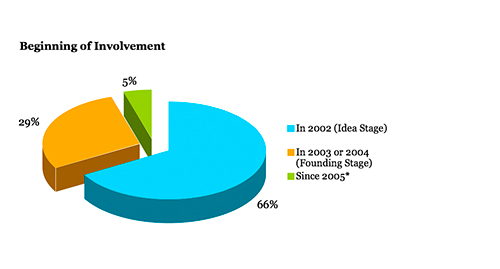
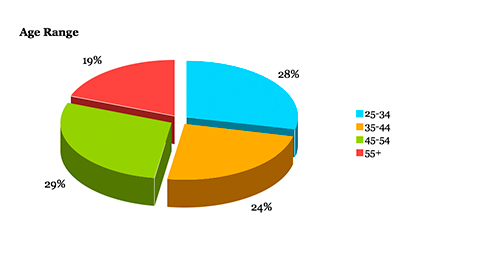
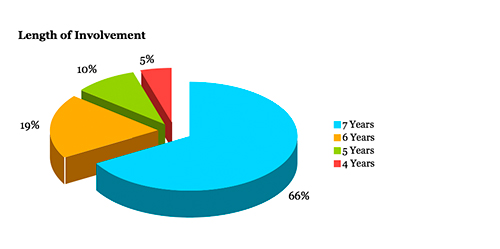
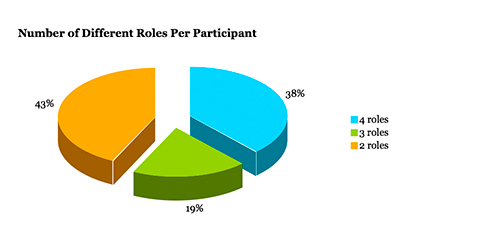
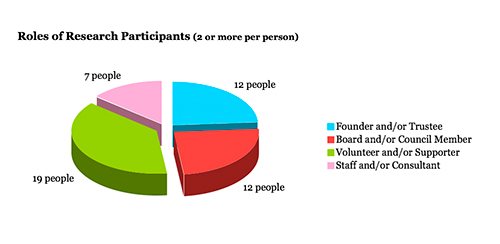
4.1: OVERVIEW (back to top) This chapter presents the findings from this study involving a detailed analysis of data gathered revealing the key factors that contributed to the rapid growth of Community Volunteers Foundation and their relationship to existing literature of (1) lifecycle models, (2) capacity building and organizational effectiveness theories, and (3) high impact growth approaches. The aim of this study was to identify and describe the elements that enabled Community Volunteers Foundation to achieve a remarkable transition from start-up to maturity stage. The study is intended to assist the leaders of this organization to develop strategies for further growth and expansion while seeking further stability. These findings may also shed light on past challenges that the organization faced as well as future roadblocks to sustaining its high impact. On another note, the findings may empower the reader to apply the replicable success criteria in other organizations to accomplish similar astonishing results. Such application of knowledge indisputably would impact the growth of nonprofit sector. As introduced earlier, this study was guided by the following research questions:Answers to these research questions were found within the transcribed interviews of the “twenty plus one” participants. Themes were derived from concepts identified by participants’ quotes and other identifiers. 4.2: PARTICIPANTS' PROFILE (back to top) The identities of the “twenty plus one” subjects will be kept confidential in this research. Following two figures provide a demographic breakdown of personal information gathered during the actual interviews based on visual observations and extracted from conversations. These figures show that all twenty participants met and in some cases exceeded the eligibility requirements. Therefore, their interviews carry significant insights accumulated over the years. Even though the Executive Director was considered as “plus one,” and was exempt from this selection process, he still met two out of the three criteria. 4.3: PRIMARY RESEARCH QUESTIONS (back to top) How did Community Volunteers Foundation achieve-early stage growth?In answering these questions, the participants focused on common themes. The major thematic categories examined by the researcher were (1) needs assessment, (2) organizational design including vision, values, and goals; (3) leadership, (4) training, (5) model, (6) adaptive capacity, (7) transparency and accountability, (8) fundraising, (9) networks and collaborations, and (10) organizational culture. All except one factor - networks and collaborations - were denoted as key factors that helped the organization achieve its successful transition from start-up to maturity stage. In addition, participants commonly referred to (1) projects, (2) target population, (3) planning, and (4) professional staff in describing the components that enabled growth. The researcher defined and used a scale to categorize the common themes: Table 4.1.1: Common Themes Expressed by the Participants
 1. Leadership 1. Leadership
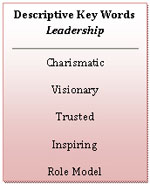
All participants identified the leader as one of the essential components in realizing growth, and each described the leader with different qualities. The majority defined the leader as a highly trusted and respected figure with an established network of relationships. While many participants attributed the success of the organization to its visionary leader and his charismatic personality, some emphasized the leader’s ability to listen to different opinions and receive criticism as well as his capacity to adapt based on feedback from others. Several subjects referred to his ability to delegate responsibilities and share leadership in order to empower staff and volunteers, and a few claimed that the leader’s honesty and approachability increased the organization’s trustworthiness. In addition, some underlined the leader’s devotion to the organization’s cause and also suggested that he became a role model to the rest of the team with his consistency, perseverance, and commitment to excellence. The majority stated that the leader’s network of relationships and his capability to engage people with similar mindsets brought the organization needed financial and volunteer resources during its initial founding stage. Some participants further asserted that his business background in the financial sector and his ability to set measurable objectives, coupled with an inspiring mission and specific projects, facilitated access to corporate donations, which is still the primary source of funding. While many participants gave specific examples and shared anecdotes to explain the positive impact of the founding leader, a few subjects were concerned about the high expectations that he might set for his successors. Overall, the majority of participants identified a charismatic and visionary leader with a good reputation, strong relationship capital, goal-setting abilities, and management experience as a vital factor in building a high-impact organization. 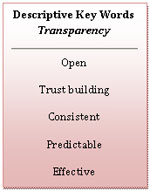 2. Transparency and Accountability 2. Transparency and Accountability
Even though some participants mentioned the importance of values during conversations related to organizational design, the vast majority of participants particularly expressed transparency and accountability as critical components to achieve growth. Most subjects referred to transparency and accountability together and shared many examples regarding their applications in day-to-day activities. The researcher grouped these illustrations in two categories: financial and non-financial. Financial: These applications included (1) being audited by a reputable and international audit firm since the beginning, (2) committing to sending donation receipts within 72 hours, (3) sharing the financial reports with the public regularly and frequently, and (4) keeping operational costs very low (less than 10 percent of total expenses).Participants expressed a direct link between transparency and accountability and the impact on building public trust. They also stated that this trust helped the organization ultimately grow its resources through expanding its credibility, volunteer force, and corporate sponsorships. 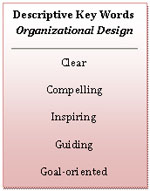 3. Organizational Design 3. Organizational Design
The vast majority of participants identified organizational design as one of the most significant factors that enabled rapid growth. When asked to elaborate, subjects highlighted (1) vision, mission, and purpose, and (2) values and principles. In addition, respondents stated that components of founding organizational design are (3) real need and niche market as well as (4) goals and objectives.
Vision, mission, and purpose were used interchangeably. Subjects defined these as the primary drive for the organization to create enthusiasm, recruit volunteers, and mobilize financial resources. The mission was most often noted as channeling youth’s energy toward social good, while vision was stated as creating social change and leveraging Turkey’s growth. Respondents described these mostly as “inspiring, clear, and compelling.”
Values and principles were also used interchangeably. Participants stressed the importance of being guided by strong values, and specifically mentioned (a) respect for differences and (b) transparency and accountability. Subjects referred to values as “the soul of the organization, universal, and guiding,” and acknowledged the organization’s ability to firmly stand behind its values.Furthermore, niche market and real needwere frequently used to describe youth as “the organization’s reason for existence,” and it is further explained in the target population theme. A few participants underlined the significance of having specific and attainable goals and objectives in building trust and credibility, which is exemplified in the planning theme. 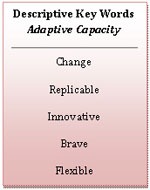 4. Adaptive Capacity 4. Adaptive Capacity
Many participants mentioned adaptive capacity as one of the unique abilities that dramatically impacted the growth process of this organization. Those who referred to this factor defined adaptive capacity as (1) being flexible, (2) ability to maximize efficiency, (3) ability to take risks and implement new strategies, (4) giving power to youth to make significant changes, and (5) ability to make quick decisions. (1) As was stated by some participants, the existing regulations do not permit university clubs to establish a formal relationship with external nonprofits. Therefore, the organization had to allow university clubs to customize their own logo. This flexibility is believed to bring forth the creativity of youngsters and to build a sense of ownership while enriching the organization’s public outreach. Only one subject was concerned about how potential abuses of this policy might weaken or even hurt the institutional identity and the organization’s credibility. (2) Several subjects described the organization as being able to maximize efficiency. They described two examples of an ability to move away from less successful projects. In one example, the organization closed its thrift store for second-hand clothes after five years of operation when it realized that the store was not creating enough revenue to be self-sufficient. Another example was a project that collected donations from different apartment complexes to provide scholarships to students. After a while, because the project was not growing at the intended pace, it was discontinued. By choosing to move away from less successful projects, the organization was able to make an efficient use of its limited resources to maximize the social impact. (3) A primary example that demonstrated the organization’s ability to take risks and implement new strategies was its collaboration with government institutions. A few subjects described the organization’s drift from this mainstream attitude and its collaboration with the Education Ministry “to improve public libraries” as one of the risky changes that leveraged the organization’s resources and increased its impact greatly. A couple stated that as this strategy of establishing partnerships with government agencies worked very well, the organization is naturally moving towards lobbying and advocacy rather than pure project execution. Another illustration of the ability to take risks and implement new strategies is the organization’s decision to become international. Instead of continuing to do what it had been successful with, the organization made the commitment to expand its programs abroad in order to leverage its social impact. (4) Giving power to youth to make significant changes was illustrated with two examples. First, the organization followed the leadership of its young board members and changed its organizational expansion model to allow more than one student club in each university. This move from a university-based model to a faculty-based model was considered risky and burdened the organization with different staffing, training, and communication requirements, but it eventually paid off as it led to further creativity and growth. The second example that was initiated by young board members was to establish different rights and privileges to youth clubs based on their history, number of members and number of accomplished projects. (5) Some participants also mentioned the organization’s ability to make quick decisions as an example of its adaptive capacity. Even though they did not provide specific illustrations for this aspect, they found it worthwhile to note as they believed most other nonprofits miss opportunities because of their highly bureaucratic structures. Many subjects called the organization “dynamic and brave” during their discussions about adaptive capacity, and they acknowledged the organization’s ability to change while at the top rather than changing strategies when there is a breakdown. They suggested that the organization’s ability to understand its environment and lead change would not be possible without its ability to make quick decisions. 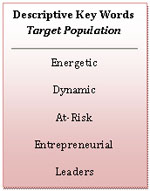 5. Target Population 5. Target Population
Target population is described as youth aged 17-25 years old. A large majority of participants referred to it as one of the vital components that led to the organization’s rapid growth. Respondents stated that the energy and dynamism of youth and the organization’s ability to convert these into concrete projects that created social change was one of the unique strengths of Community Volunteers Foundation. Many subjects emphasized that at the time, there were no other national organizations addressing the needs of youth as well as investing in its potential despite the fact that almost 60 percent of the population is under 30 years of age. In this regard, subjects affirmed that the organization filled a significant need by providing a diverse range of opportunities for youth to develop their life skills and to take on social responsibility projects. In addition to the youth’s need to be involved in meaningful activities, participants also described the youth’s need to be trusted and empowered. In view of that, they highlighted the importance of the organization’s democratic governance model which allowed young people to actively participate in the decision making process as board members. A few respondents further claimed that the organization’s commitment to invest in youth, despite the risks associated with it, was a truly exciting vision as it could impact and change the future of the country in a positive way. Therefore, it drew attention and support immediately, and became one of the key factors that contributed to the success of the organization. 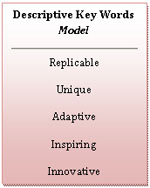 6. Model 6. Model
A large majority of participants mentioned the model as one of the key factors for the organization’s rapid expansion throughout the country. Respondents primarily referred to the model as the one used in expanding the organization to different cities through local chapters. This expansion model was based on establishing university clubs, and channeling youth’s energy to serve local communities with the guidance of adult members and local advisory boards. Subjects also commonly mentioned project models, and defined them as being replicable and adaptive. Some respondents also talked about the governance, fundraising and training models. The governance model is to involve youth in decision-making; the fundraising model is to specifically target corporations; and the training model is to provide peer-to-peer trainings. It was believed that having various models enabled the organization to expand itself by replication and increased its impact. Additionally, some participants suggested that having a nationwide organization targeting youth with the support of adults was a unique model that inspired adult members who wanted to help their sons and daughters, and also motivated young people who wanted to contribute to society and be trusted. Even though there was a variety of perceptions as to what a model is, some respondents asserted that the organization itself is a ‘role model’ that can be an inspiration to other nonprofit organizations with its commitment to transparency, democratic organizational culture, and ability to mobilize its stakeholders. 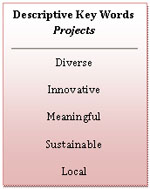 7. Projects 7. Projects
A large majority of participants identified projects as one of the vital components that contributed to the success of the organization. They referred to projects as “innovative, diverse, sustainable, inspiring, and empowering.” In addition, projects were described as “serving real needs, designed by youth, and a platform for peer learning.” Some respondents used youth councils as an example of a platform to exchange know-how and develop new projects. These subjects suggested that young volunteers come together to share their projects with each other, and replicate successful examples in different cities with slight adjustments. Another aspect stated by participants was that most projects were designed by youth taking into consideration the local needs. This created an empowering context and sense of ownership of the projects that allowed them to be more sustainable. The sustainability aspect of the projects was highly emphasized by the participants and identified as a unique strength that set the organization apart from other nonprofits providing similar services. For instance, it was stated that while some organizations had programs to visit orphanages or senior centers infrequently, on certain dates of the year, Community Volunteer Foundation’s projects emphasized continuity, and most projects that included serving local beneficiaries consisted of visits for twelve or more consecutive weeks. Since the projects were designed by youth from diverse backgrounds, they tended to be more innovative which enabled the organization to attract contributions from a diverse range of donors. The organization received multiple nationwide and international awards acknowledging the creativity of its projects, and gained further brand recognition and visibility, which fueled the organization’s exponential growth. 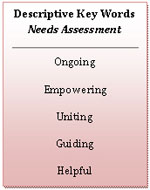 8. Needs Assessment 8. Needs Assessment
A large majority of participants identified needs assessment as one of the essential components to achieve growth. The respondents mainly referred to two types of needs assessment efforts. These are (1) initial needs assessment done in the idea stage of the organization, and (2) ongoing needs assessment done regularly. Initial needs assessment: A number of participants illustrated the importance of needs assessment in the idea stage with several examples. These include the feasibility meetings that were initiated by the founding leader that helped establish a solid groundwork, and the first youth council that was done to strengthen the planned organizational design.Participants expressed a direct link between needs assessment and the sense of ownership among stakeholders. Some subjects asserted that those who contribute to the needs assessment processes are more likely to stay engaged with the organization in the long term, and assist the organization in accomplishing the goals that they set together. 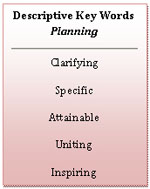 9. Planning 9. Planning
In relation to needs assessment, a large majority of participants highlighed the significance of the planning process and its contribution to the overall growth of the organization. Subjects who talked about the planning process described this aspect as “guiding, clarifying, uniting, and inspiring.” Some respondents gave credit to the business background of the founding leader and the executive team in relation to setting successful multi-year goals and objectives that guided its growth. These participants articulated that even during the idea stage, an ad-hoc executive committee was established to develop an annual plan. A couple of years later, the executive director initiated the first five-year-strategic plan which is continuously updated. Subjects also stated that although there were clearly defined goals, there was enough flexibility to review and adjust them based on the changing environment. Additionally, a couple stated that planning and goal setting was done not only at the headquarters, but also heavily practiced at the local chapters. It was also expressed that setting inspiring goals and exceeding their objectives led to an increased confidence in the organization’s ability to keep its promises, and positively impacted its fundraising efforts. Moreover, sharing the goals and objectives that came out of the planning process openly with the public provided additional accountability to the organization to achieve its goals. Respondents affirmed that the organization’s ability to set clear goals and objectives helped unite its stakeholders around a common undertaking and empowered them to take actions as they were able to better understand what needed to be done next. A couple of participants compared this organization to the others that they are involved with, and claimed that planning, both short-term and long-term, is not a common strength among other nonprofit organizations and is a key factor that enabled growth. 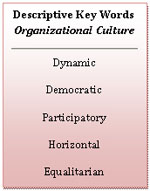 10. Organizational Culture 10. Organizational Culture
A large majority of participants elaborated on the organizational culture as one of the key factors in achieving exemplary growth. Organizational culture was primarily described as democratic and participatory in which everyone’s contribution was welcomed. Participants stated that these characteristics created a sense of ownership and belonging among staff, volunteers, and the board members. While a majority of subjects perceived organizational culture as a key strength and an essential component to achieve growth, a few suggested that this aspect is still developing and not yet fully formed. Those who emphasized the importance of organizational culture stated that it is horizontal and equalitarian. Among the examples, they pointed at the flat management model of the organization that consisted of only a few executive team members. Furthermore, some respondents suggested that this organization is the only one that allowed young members to join the Board of Directors with equal rights to the adults, and to be part of the decision making process. This characteristic was viewed as part of being very democratic and used as an example of “walking the talk,” meaning that the organization is not only serving the youth with their energy, but also with their own ideas. Additional characteristics that were brought up by a few respondents highlighted that the organizational culture was formed and strongly guided by its values. For example, the respect for diversity principle created a harmonious environment and apolitical stand. More importantly, the organization was commonly referred to as being brave, since it took on projects that were commonly considered challenging due to their less popular nature for funding, such as the democracy and human rights projects. 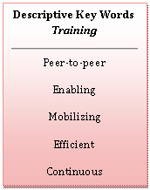 11. Training and Empowerment 11. Training and Empowerment
A large majority of participants emphasized the organization’s investment in training and empowerment of youth as a factor that led to expansion and success. Participants also described this aspect as one that created consistency and brought standardization to its volunteers. There are two types of trainings, internal and external. Internal trainings: Respondents stated that these trainings are aimed at empowering and strengthening young volunteers. It is referred to as key volunteer trainings and includes topics such as, volunteerism, project development, and teamwork. These trainings are given to all volunteers in five different stages, and resulted in increased efficiency and productivity.A few participants suggested that the internal and external training created direct value and was one of the important attractions for volunteers to join the organization. It was also expressed that the organization’s “peer-to-peer” training model, which trained volunteers to be trainers themselves, led to a strong sense of ownership and contributed to the organization’s growth. In this regard, participants suggested that the trainings bring together a diverse group of youth from different cities, creating further synergy and mobilization. 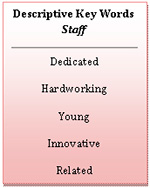 12. Staff 12. Staff
A majority of subjects identified staff as one of the driving forces in building a high-impact organization. Those who emphasized the importance of staff shared many examples describing their qualities and demonstrating their influence. The most common descriptions of the staff were “young”, “devoted,” “volunteer spirited,” and “paid volunteer.” Participants mentioned many instances that demonstrated the positive influence of staff on the advancement of the organization. Some suggested that staff treats their responsibilities as if the organization’s success depends on them: They stay late without overtime pay, give up their annual vacation to complete projects, constantly take trips to the field, stay at volunteers’ homes rather than in expensive hotels, and continue thinking about how to achieve better outcomes during their personal time. A few respondents mentioned that this level of commitment is also a challenge for the organization as hard-working staff get burned out and leave the organization to find more structured jobs in order to balance their personal and professional lives. Even then, they continue to be involved with the organization as volunteers, and sometimes set up new partnerships between the organization and their new jobs. It was described that the organization has a very flat structure that does not offer many opportunities for staff to move up. Even though this situation was considered to be a challenge, a few referred to it as a positive factor since the staff turn-over every couple of years brings diversity, new ideas, and perspectives that keep the organization “dynamic.” In addition, some subjects stated that the business background of the executive director helped the organization establish professional standards and facilitated the results-oriented management methods, which brought about a multiplying growth in revenue. 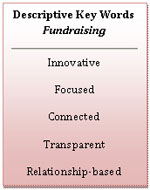 13. Fundraising 13. Fundraising
The organization’s ability to mobilize financial resources was an important factor emphasized by a majority of the participants. Fundraising was commonly associated with several other key factors like leadership; transparency and accountability; staff, particularly executive director; projects, communication; and adult volunteers. Those who referenced leadership stated that the founding leader’s credibility and network of relationships brought the organization its initial funding. Others who mentioned the link between successful fundraising efforts and transparency and accountability gave examples of the financial reporting and gaining the trust of donors. Those who gave credit to staff highlighted the effective communication of the executive director with corporations. Some of the subjects who established a connection between the variety of projects and successful fundraising results suggested that corporations prefer to fund specific projects with measurable outcomes that are of interest to them and their markets. Participants also expressed that the organization’s clear communication and ability to present its projects with the help of visual media was crucial for fundraising. Some participants claimed that the organization receives more than 90 percent of its funding from corporate donors. Additionally, they stated that these strategies brought sustainability since most corporate sponsors commit to multi-year donations. A few respondents explained the role and importance of innovative fundraising events, organized primarily by adult volunteers. These subjects suggested that signature events, like high-end auctions and bazaars, were the first examples of their kind, and later, many other nonprofits started to organize similar fundraising activities. A couple of subjects referred to the link between empowerment and the organization’s ability to train its volunteers to raise funds, as well as to receive in-kind donations from those who could not make cash contributions. Various Other Factors Various other factors were expressed by less than a majority of respondents. The researcher lists the most common ones below for reference: Respect for differences: Diversity and mutual understanding played a role in creating a harmonious environment and strong teamwork. 4.4: SECONDARY RESEARCH QUESTIONS (back to top) What were the main difficulties faced during its growth?In answering these questions, the majority of respondents primarily focused on the perceived challenges in sustaining performance whereas only a few subjects shared their thoughts on the main difficulties faced during the organization’s growth. Unlike primary research question findings, none of the challenges were agreed upon by more than a majority. Participants focused on different kinds of issues and mentioned their worries in various areas. The researcher grouped the perceived challenges in sustaining performance in two main categories: future and current challenges. Among future challenges, many participants expressed concerns about upcoming (1) leadership transition and its potentially negative impact on the future of the organization. In addition, some perceived the (2) external influences, specifically political polarization and economic crisis, as future challenges that may restrain the organization’s growth. Among current challenges, several (3) volunteerism-related issues were brought up as challenges limiting the organization’s potential to grow exponentially. These issues were gathered mainly as youth volunteer turn-over rate, volunteer profile, alumni volunteers, and adult volunteers. Furthermore, some respondents referred to (4) communication issues while defining challenges in sustaining performance, and gave repeated examples for issues, such as know-how transfer, generation differences, and work styles. The researcher organized the difficulties that were faced during the organization’s growth as (5) past challenges and explained the most common ones, i.e. uncertainty, risk of working with youth, not being known. Finally, (6) various other challenges were listed under additional challenges as a reference to the issues that were expressed by only a couple of participants. Table 4.2.1: Common Challenges Expressed by the Participants
1. Leadership Succession The primary question in most subjects’ mind is the future leadership succession, and it has two main aspects: Short-Term: What will happen once the founding leader’s term expires as the Chairman, even if he continues to serve as a board member?The researcher grouped most of the leadership succession questions and concerns into a few categories, such as governance, human resources, fundraising, mobilization, and visibility. Governance: Who will take over his role and responsibilities? Is that person going to be able to fill in the shoes of the current leader? Is the new person going to take the organization to a different direction? Will the organization be able to continue its growth?2. External Influences The second most commonly expressed challenge is the political and economic environment in Turkey and its potential impact on the growth and stability of the organization. These external challenges are mostly future oriented and described by the respondents as follows: a. Political Polarization3. Volunteerism-related Issues The third most commonly identified challenge is in the area of volunteerism and based on current issues. The researcher grouped these per their repetitive themes as follows and used the subjects’ description to explain the perceived challenges: a. Young Volunteer Turn-Over Rate5. Communication Issues The fourth major challenge consists of communication issues that are inter-related and were repeatedly mentioned. These are grouped into the following categories: a. Know-how Transfer5. Past Challenges A few participants shared examples from the challenges that the organization faced in the past, especially at the start-up stage. These are summarized as follows: a. Uncertainty6. Various Other Challenges There were various challenges that were expressed by less than a few respondents and had a diverse spectrum. The researcher listed the most common ones as reference points: Protecting organization’s reputation: As the organization becomes more visible, there is more chance for provocations and negative publicity. 4.5: SUMMARY OF FINDINGS (back to top) The twenty one subjects who participated in this study provided valuable insights through the semi-structured interviews. Those who met the eligibility criteria established by the researcher and accepted to take part in this evaluation have been involved with the organization since its start-up stage and have served in various capacities. They, therefore, answered the open-ended interview questions and elaborated on the key factors that contributed to the exemplary growth of Community Volunteers Foundation. In addition, the participants expanded upon the perceived challenges in sustaining performance as well as the main difficulties that were faced during growth. The primary research questions intended to identify the factors that enabled the organization’s rapid growth and to describe how the organization achieved its transition from start-up to maturity stage. In this regard, more than 90 percent of participants pointed out four essential components in building this high-impact organization, explicitly (1) charismatic and visionary leader, (2) commitment to transparency and accountability, (3) inspiring and well-thought out organizational design, and (4) adaptive capacity to manage change. Additionally, more than 70 percent of respondents highlighted the importance of (5) energetic target population, (6) replicable model, (7) diverse projects, (8) ongoing needs assessment, (9) strategic planning, (10) democratic organizational culture, and (11) empowering trainings, whereas more than 50 percent of subjects emphasized the significance of (12) devoted staff members and (13) innovative fundraising strategies in realizing early-stage growth. The secondary research question aimed at describing the past and future challenges. In their responses, the subjects predominantly addressed current and future challenges and shared their concerns around a diverse range of issues. The researcher grouped these as (1) leadership succession, (2) external circumstances, (3) volunteerism-related, and (4) communication issues, in addition to past challenges. A brief list of various other challenges was also provided as a reference. |